


MARK Climate Technology distributor in TürkiyeElburz Mühendislik
Air Handling and Heat Recovery
Supply controlled outdoor air, recover heat from suitable extract air and provide the required air treatment.
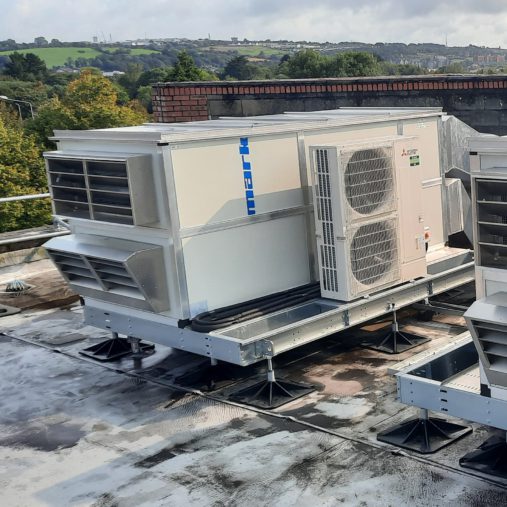
Plan fresh air around energy and available space
How does it work?
Central units distribute air through ducts; decentralised solutions such as VERTIFLOW serve high halls directly. Heat recovery reduces the load required to condition outdoor air.
Where does it fit?
Factories, high halls, offices, schools and commercial buildings. Duct space, occupancy and process loads, maintenance access and contaminants guide the product family.
A production or commercial space with more occupants
More people and longer operating hours increase the need for outdoor air. Simply opening doors makes airflow and indoor temperature harder to manage.
Coordinate supply, extract and heat recovery
A central heat recovery system can recover part of the energy from outgoing air while supplying filtered outdoor air. Compact or ceiling-mounted options can help where plant space is limited.
Set the airflow from occupancy and activities, then check duct resistance, filtration, sound levels and maintenance access. Heat recovery does not replace the required outdoor air supply.
Fresh air where long duct runs get in the way
In production halls, workshops and warehouses, roof height is only part of the challenge. Machines, cranes and existing services can leave little room for a central duct network.
VERTIFLOW combines decentralised ventilation, rotary heat recovery and air distribution in a roof-mounted arrangement. It serves the hall directly, reducing the need for extensive internal air ducts.

Recover heat from outgoing air
A rotary heat exchanger transfers heat between the outgoing and incoming air streams, reducing the additional energy required to condition outdoor air.
Distribute air to suit the season
The integrated distributor uses motorised louvres. In heating mode, air is directed towards the working zone; in cooling mode, a more horizontal throw helps distribute the air.
Bring operation together
Integrated controls coordinate the unit. BACnet or Modbus integration connects it to building management; additional heating and cooling are selected to suit the project.
Where does this approach fit?
New or existing industrial halls where local ventilation can simplify the internal duct layout. A single roof opening accommodates the unit arrangement, while roof structure, weather sealing, maintenance access and air distribution remain part of the installation design.
VERTIFLOW provides general ventilation. Welding fumes, blasting dust and other process contaminants still require suitable source extraction. For heated replacement air supporting substantial process extraction, explore CALFLO →
Several air treatment needs in one system
A project may need a particular combination of filtration, heating, cooling and heat recovery rather than a single standard ventilation unit.
Configure the air handling unit around the duty
A MARK air handling unit can be selected around the required airflow and treatment stages. The chosen modules and options must be stated in the quotation; they are not automatically included in every unit.
Coordinate coil temperatures, drainage, frost protection, available energy sources and controls with the building services design.
Selection conditions
Share the building use, occupancy, operating hours, required airflow, duct layout and available installation space. Identify any process contaminants separately: ordinary comfort ventilation may not suit contaminated extract air.
A common question
Does heat recovery cover all the heating demand?
No. It can reduce the energy needed to condition outdoor air, but the remaining load depends on outdoor conditions, recovery performance and the building. Additional heating or cooling may still be required.
Compare air handling options
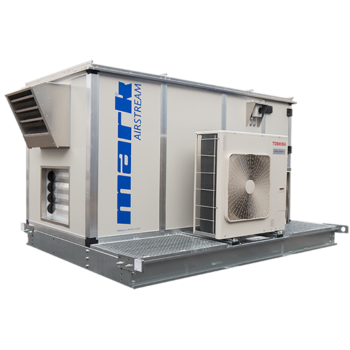
AIRSTREAM heat recovery unit
View the manufacturer’s source for this model and its technical details.
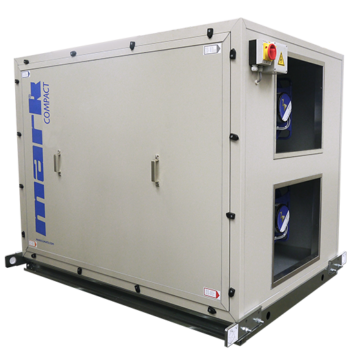
COMPACT heat recovery unit
View the manufacturer’s source for this model and its technical details.
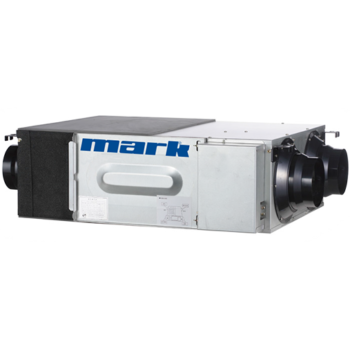
ERV heat recovery system
View the manufacturer’s source for this model and its technical details.
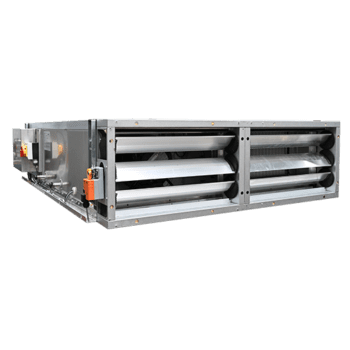
AIRSTREAM FLATLINE LW ceiling heat recovery unit
View the manufacturer’s source for this model and its technical details.
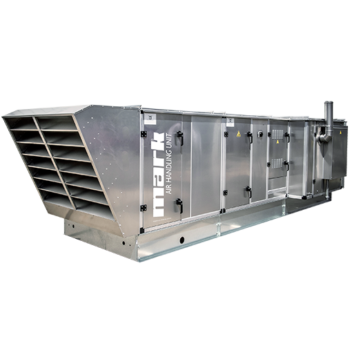
AIRSTREAM AHU air handling unit
View the manufacturer’s source for this model and its technical details.

VERTIFLOW decentralised heat recovery unit
View the manufacturer’s source for this model and its technical details.
Six product families for central ventilation, decentralised high-bay applications and ceiling installation.
| Product family | Technical features | Installation and applications |
|---|---|---|
| AIRSTREAM ↗Central heat recovery | Series range: 600–45,000 m³/h. CFX: counterflow exchanger with bypass; HWX: rotary exchanger. EC fans. | Indoor or outdoor. Central ducted systems; project-specific controls and optional additional heating/cooling. |
| VERTIFLOW ↗Decentralised high-bay ventilation | Integrated air distributor with motorised louvres for heating and cooling. Optional heat-pump after-heating/cooling. | High-ceilinged industrial halls. Decentralised arrangement reduces the need for extensive internal ductwork. |
| COMPACT ↗Standard compact unit | Series range: 600–4,000 m³/h. Counterflow plate or rotary exchanger; EC fans and integrated controls. | Indoor or outdoor. Standardised compact construction for offices, schools and workshops. |
| ERV ↗Ceiling heat and moisture recovery | Counterflow exchanger with heat and moisture transfer. 10-speed BLDC motor, automatic bypass; optional CO₂ control. | Indoor, decentralised ventilation. Offices, showrooms and schools; optional electric re-heater. |
| AIRSTREAM FLATLINE LW ↗Low-profile ceiling unit | Series range: 800–3,000 m³/h. Aluminium counterflow exchanger; EC fans and filter pressure monitoring. | Indoor, above suspended ceilings. Integrated controls; optional water heating and cooling coils. |
| AIRSTREAM AHU ↗Project-specific air handling unit | Series capacity up to 150,000 m³/h. Modular construction; heating, cooling and heat recovery to project specification. | Indoor or outdoor. Facilities requiring high airflow and multiple air treatment functions. |
Airflow and performance: Figures indicate the manufacturer’s series range. Unit duty depends on external static pressure and filter/coil pressure losses. Heat recovery efficiency is not the percentage saving in total building energy use; it varies with operating conditions.
Technical selection and installation
Standard or project-specific
COMPACT is a standard design covering 600–4,000 m³/h; low-profile FLATLINE LW covers 800–3,000 m³/h. AIRSTREAM covers 600–45,000 m³/h, while AHU offers project configurations up to 150,000 m³/h. These are family ranges; select against external pressure.
Exchanger, filtration and moisture
CFX denotes a counterflow plate exchanger and HWX a rotary exchanger. COMPACT HWX also offers moisture recovery. Assess filtration, pressure loss, bypass and contaminant-transfer risk for the application; exchanger efficiency is not the whole building’s saving.
Automation and maintenance
COMPACT and FLATLINE LW provide integrated controls with suitable BMS/BACnet/Modbus connectivity. AHU control is programmed per project. Coordinate duct connections, filter replacement space, service doors, condensate drains and the fire strategy in the layout.
Technical documents
Use the manufacturer links above for product details. Final selection is confirmed against current technical documentation and project conditions.
Product information: MARK Climate Technology and the Elburz–MARK product brochure. Product availability and options are confirmed at quotation stage.
Manufacturer manuals and product data
Sources checked: 15 November 2026. Confirm the selected configuration and operating conditions with current manufacturer documents.
Let’s discuss your project
Share your application and project requirements. We coordinate product selection, quotation and supply with MARK.